Site conditions that change generator and light tower choices
- Placement: Can the machine sit below the task or at the perimeter? Tight compounds and controlled-access areas may require shorter cable runs or compact masts.
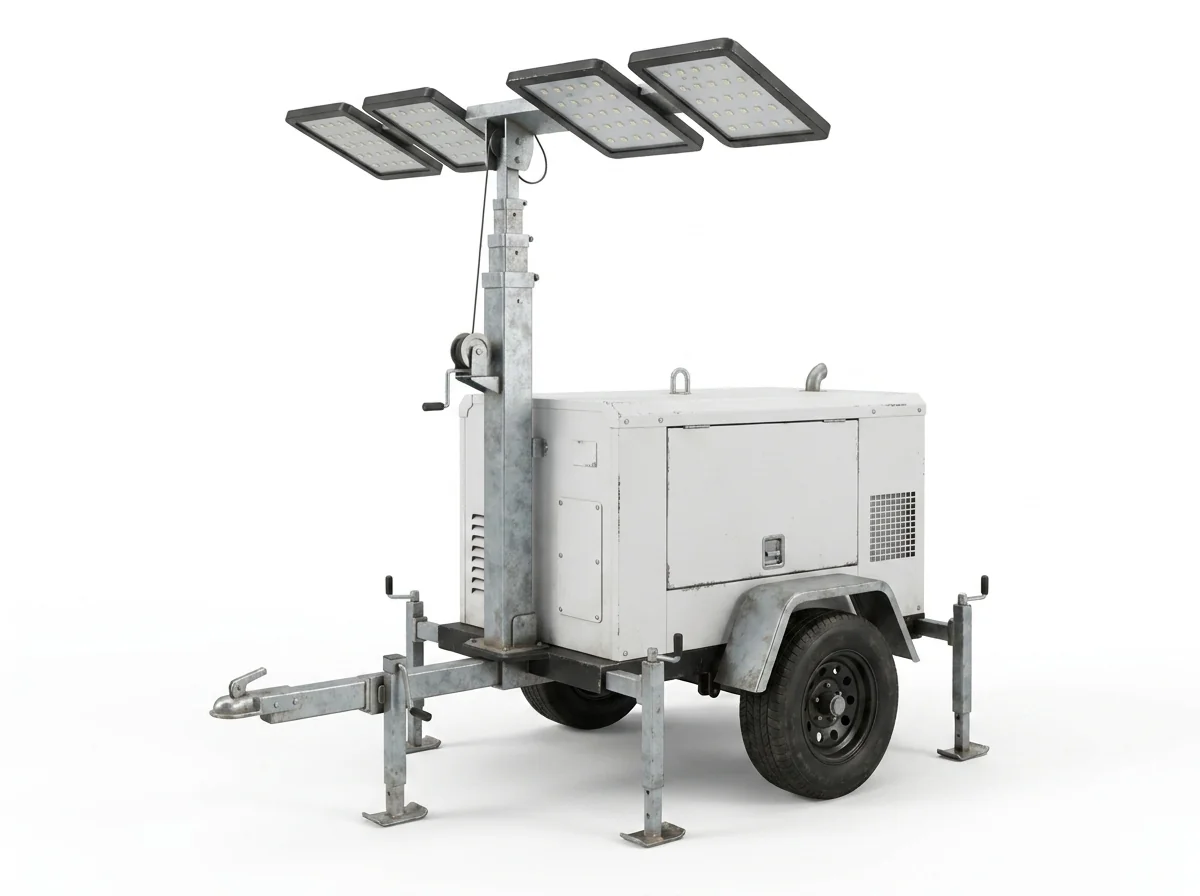
- Surface: Slab-on-grade in local distribution buildings supports smaller electric loads and towable light towers with narrow outriggers. Exterior rough terrain on the Front Range side needs wider stance and higher ground clearance.
- Wind exposure: Frequent gusts around open industrial sites require checking the selected tower’s wind rating and site-stability factors configuration. Actual conditions, the unit’s instructions, and site procedures govern stability decisions.
Power planning at altitude
Elevation around Colorado Springs can influence internal combustion performance and the margin between rated and usable output. For longer cable runs or motor starts, build in headroom so voltage drop and altitude derating don’t pinch the load. For indoor slab work where exhaust is restricted, coordinate with building ventilation and consider distribution from an outdoor unit placed along the access route.
Lighting coverage and glare control
- Task height and distance: Map pole spacing against the working envelope—dock faces and racking aisles need uniform, lower-glare coverage; exterior yard work benefits from higher mast and broader beam patterns.
- Security and compliance: Aerospace-adjacent facilities often require defined light boundaries and shielded fixtures. Confirm required foot-candle levels and spill limits before sizing towers.
Access and routing constraints
- Gate clearances and turns affect towable tower selection.
- Cable routing across dock aprons and active forklift paths may require overhead routes or trench spans.
When related lift gear matters
If lighting or power supports elevated work, confirm the lift category first, then size support gear to it: - Smooth slab, indoor pick work: see /electric-scissor-lift-rental/. - Variable exterior grades or unpaved pads: see /rough-terrain-scissor-lift-rental/. - Over-obstruction access or broad reach: see /boom-lift-rental/ and /articulating-boom-lift-rental/.
Measurements to gather before you call
- Total running kW/kVA and largest motor start
- Voltage and phase, plus cable length to furthest load
- Indoor vs. outdoor placement, ventilation limits, and noise constraints
- Tower mast height, fixture type, and target coverage area
- Access width, turn radii, and surface bearing capacity